Histofy.ai
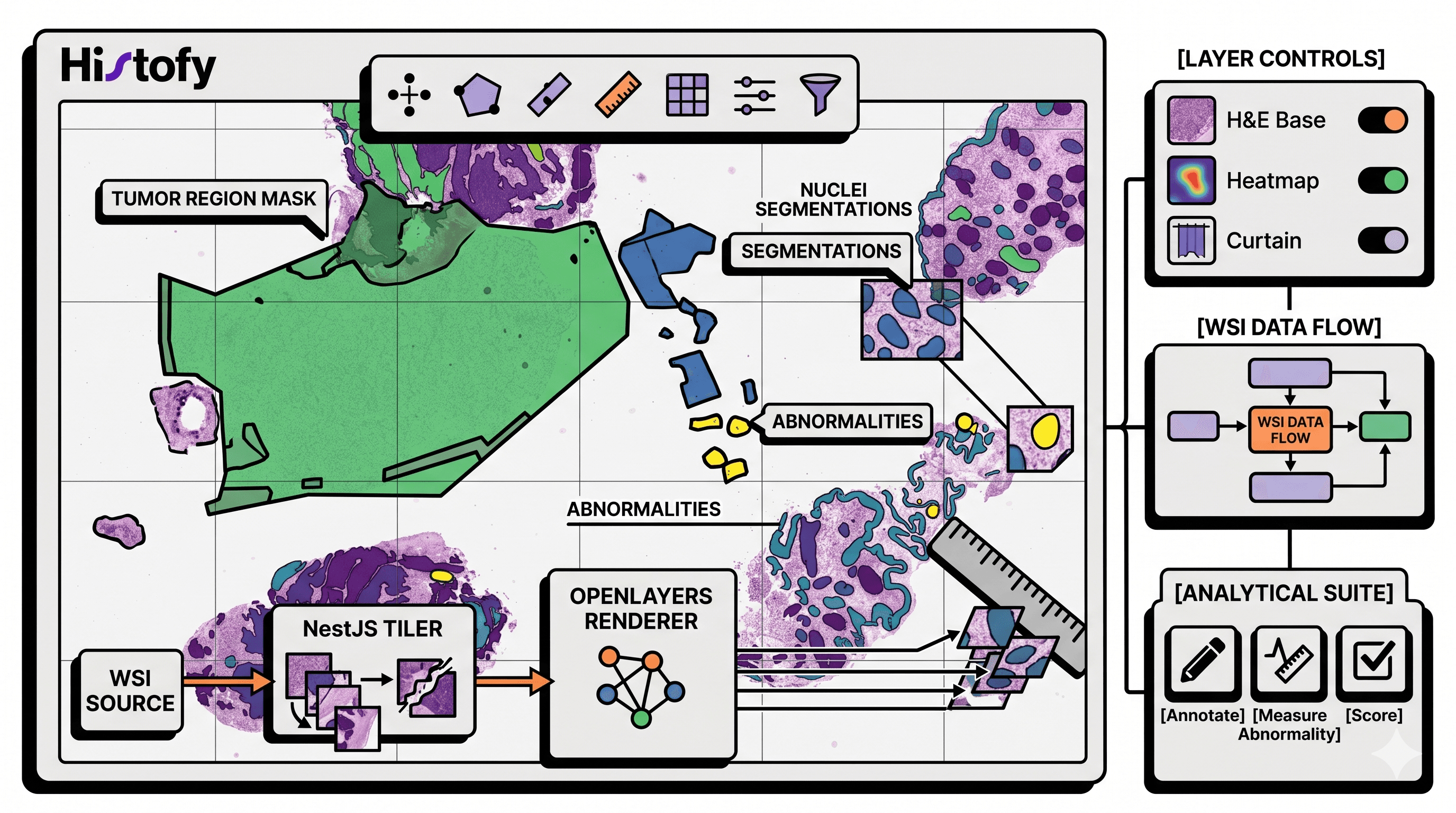
Engineered a high-performance rendering solution for terabyte-scale medical imagery using OpenLayers, Next.js, alongside a NestJS image tiling service for real-time image fragmentation. Leverages the huge amount of pixel data contained in digital pathology slides to enhance tissue analysis. Involves a suite of tools to overlay over images for numerical identification of abnormalities.
Project Details: Histofy GI-Miner
The Context
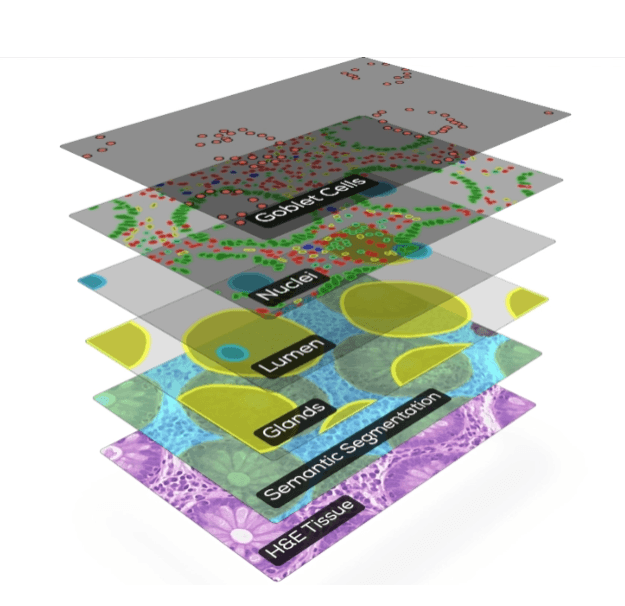
Histofy’s GI-Miner is a sophisticated AI suite that quantifies deep cellular structures (nuclei, glands, and goblet cells) from gastrointestinal pathology images. While the AI models generate the MAPs (Measurable Attributes for Pathology), the core challenge was human-in-the-loop interaction. I engineered the high-performance rendering engine that allows pathologists to navigate these massive slides and toggle complex AI overlays in real-time.
Core Technical Challenges & Solutions
1. Rendering the "Google Maps" of Human Tissue
- The Constraint: Digital pathology slides (WSI) are often several gigabytes or even terabytes in size. Loading them directly into a browser is impossible.
- The Solution: I implemented a NestJS-based tiling service. This backend acts as a real-time fragmentation engine, slicing the massive slides into 256x256 pixel "tiles" on the fly. On the frontend, I utilized OpenLayers within a Next.js environment to fetch only the fragments currently in the user's viewport, providing a seamless infinite zoom and panning experience.
2. Visualizing Billions of Data Points (AI Overlays)
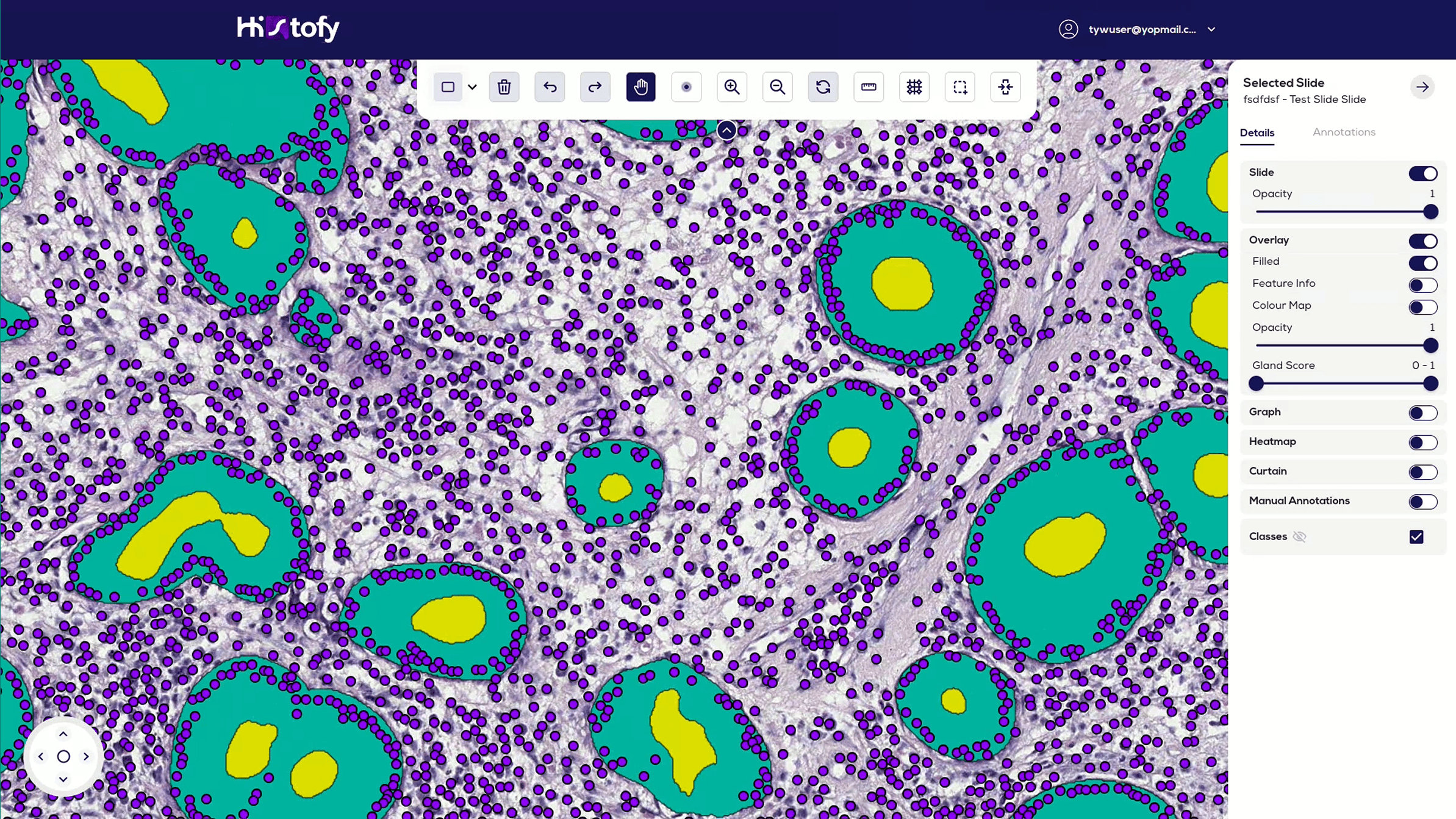
- The Constraint: GI-Miner identifies over 15 tissue types and millions of individual cell nuclei. Overlaying this much vector data simultaneously would traditionally cause significant browser lag.
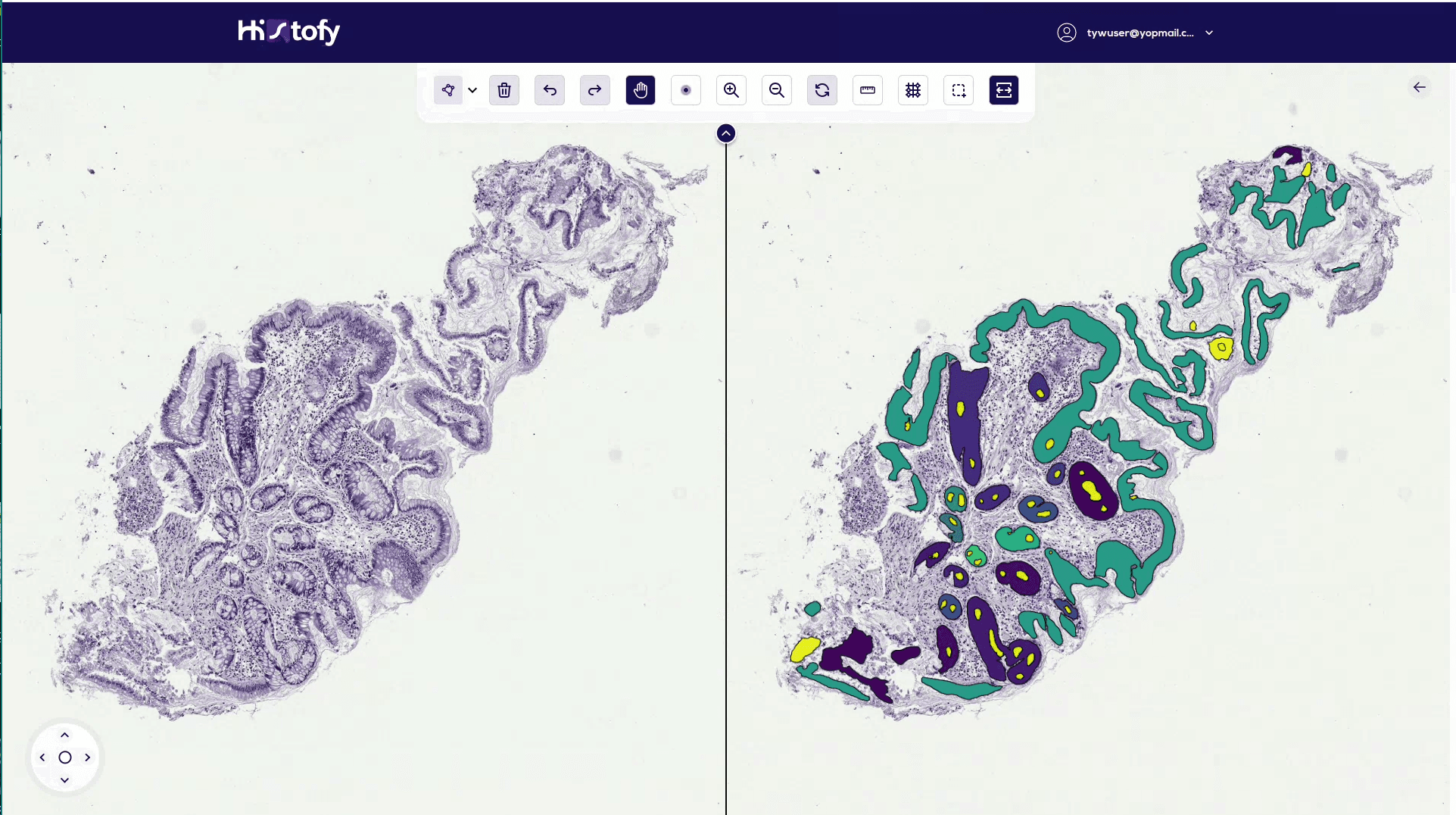
- The Solution: I architected a Layer Orchestration System. By decoupling the AI segmentation data from the base H&E slide, I enabled a toggle system supporting Overlays, Curtains, Heatmaps, and Graphs to name a few. Pathologists can dynamically adjust opacity and switch between layers (e.g., Gland Score vs. Nuclei Density) without re-rendering the base image.
3. Precise Coordinate Synchronization
- The Constraint: AI annotations must be frame-perfect. If an annotation is off by even a few pixels at 40x magnification, the clinical data is invalid.
- The Solution: I mapped the AI-generated coordinate system to OpenLayers' geographical projection. This ensured that as a user panned or zoomed, every Signet Ring Cell or Tumor Region Mask remained anchored to its exact biological location.
Technical Highlights
I was part of something that saves human lives!